
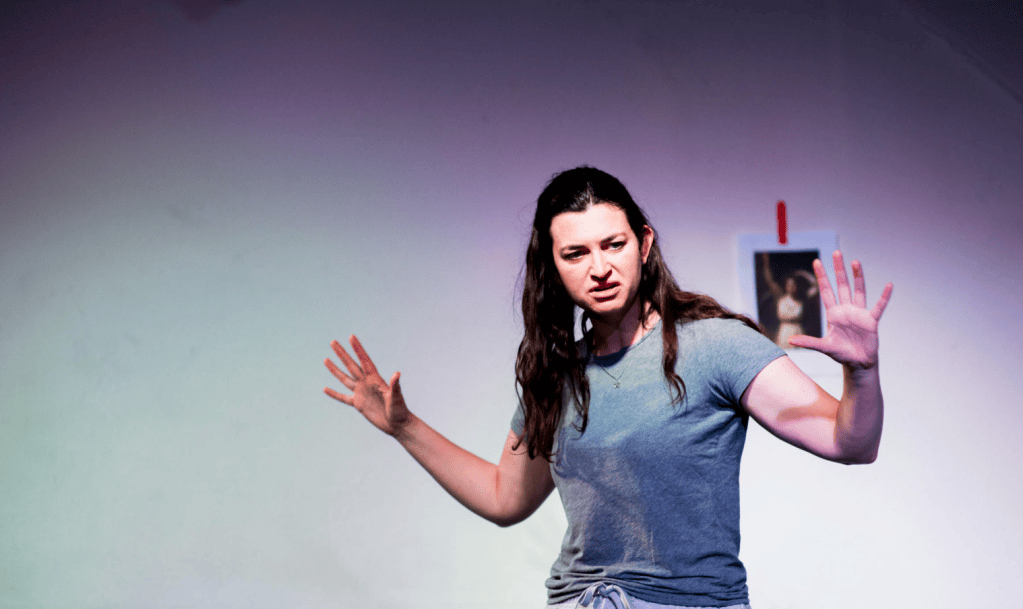
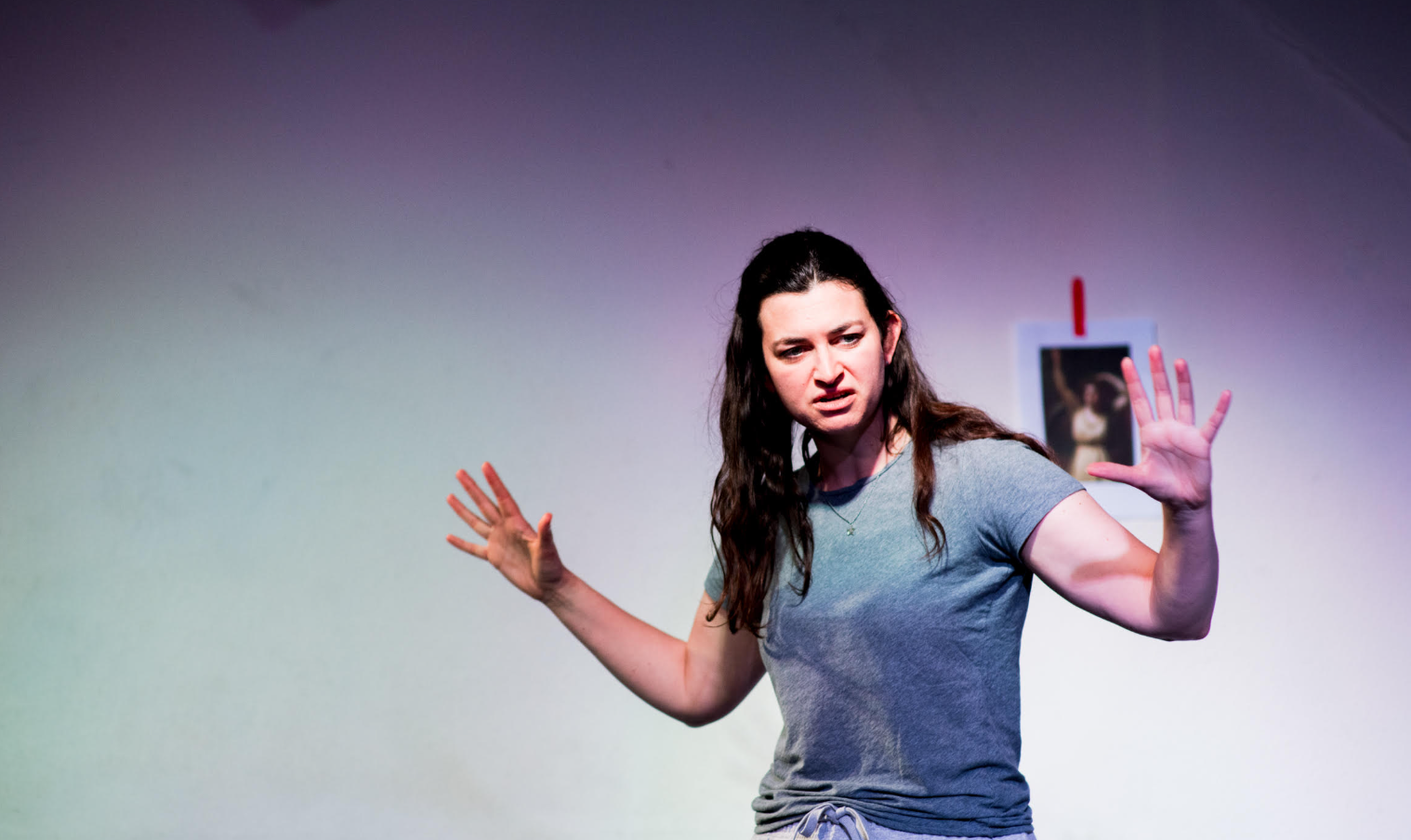
Today we are going to go behind the scenes of a show that is having a final performance at this months Lambeth Fringe. Saving Myself has had success at various events and festivals around the United Kingdom and it will say its final goodbye on Wednesday 14 October at 7.30pm at The Bread & Roses Theatre. I spoke to writer Tim Stubb Hughes to find out more.
Hello! Tell us about yourself?
I’m Tim Stubbs Hughes, a playwright, photographer and theatre producer.Saving Myself is my first produced play, although I’ve spent much of my working life around theatre in one form or another.
I’m particularly interested in stories about memory, identity and the stories we construct about ourselves – or, perhaps more importantly, the stories other people construct about us. Saving Myself grew out of those interests and my fascination with folklore, ritual and the ways old stories continue to shape how we understand ourselves.
The production is directed by Julia Stubbs, performed by Jessamy James and produced by 20 South Street in association with Grey Swan. It premiered at Brighton Fringe in May, went to Camden Fringe in August and now comes to Lambeth Fringe for its final performance of 2026.
Tell us a bit about the show Saving Myself
Saving Myself takes place over the course of one night.
Lilly is alone in her flat surrounded by books, images, fragments of stories and an unlit candle. Since she was a child, whenever something went wrong she somehow became part of the explanation: pets disappearing, things breaking, uncomfortable things nobody wanted to discuss.
After experiencing a violent assault, all those old stories begin to return. Lilly starts to wonder whether there really is something wrong inside her – something inherited, something monstrous, perhaps even something that needs to be destroyed.
The play moves between realism, poetry, folklore and ritual as Lilly tries to separate what actually happened to her from everything she has been told about herself. Ultimately it is about a woman trying to reclaim ownership of her body and her own story.
How are rehearsals going?
At this point it feels less like rehearsing a new production and more like returning to something that has accumulated a history.
We had four performances at Brighton and then three at Camden, so Jessamy and Julia have had the opportunity to discover what happens when the play is actually placed in front of an audience. You learn things in performance that you simply cannot discover in a rehearsal room.
For The Bread & Roses it is about going back into the detail, trusting the quieter moments and allowing everything we’ve learnt from Brighton and Camden to sit inside the performance without overworking it.
There is something quite exciting about knowing this is our final performance of the year as well. It gives the evening a slightly different energy.
What can you tell us about the stage set?
It is deliberately sparse.
Lilly’s world is constructed from fragments: papers and images, books, clothes and a handful of objects which gradually begin to acquire significance. There is an unlit candle sitting at the centre of much of what she is thinking about.
We wanted the space to feel partly like a real room and partly like the inside of Lilly’s mind – somewhere familiar that can gradually become much less certain.
At Camden, that intimacy became particularly important. The audience is very close to Jessamy and there really isn’t anywhere for either Lilly or the performer to hide. Bread & Roses is another wonderfully intimate fringe space, so I think that quality will become even stronger there. The theatre has a capacity of around 50, which suits a piece like this extremely well.
What is the most challenging thing about doing the show?
Finding the balance.
The play deals with trauma, sexual violence, shame and the way someone can internalise the things other people have said about them. We never wanted Lilly simply to become a representation of trauma.
She has to remain a person. Difficult, funny, frustrating, intelligent, contradictory and capable of making choices.
It is also important that the audience isn’t simply told what to think. There are deliberately unanswered questions in the play. Is there really something inside Lilly? Is the mythology helping her or harming her? Is the ritual she creates an act of destruction or survival?
Holding onto that ambiguity while still giving the audience an emotional journey has probably been the biggest challenge.
The best thing about touring the show?
Watching it change.
Brighton was genuinely the beginning – the first time we discovered whether this piece we had created would communicate with an audience.
Camden was different again. The venue was extremely intimate and suddenly the relationship between Jessamy and the audience became much more exposed.
And now The Bread & Roses gives us another space and another audience.
That’s one of the pleasures of fringe theatre. You’re not simply reproducing exactly the same thing in different buildings. Each room teaches you something about the play.
What have been some of the best highlights since doing the show?
Simply getting the play in front of an audience for the first time at Brighton was enormously important to me because it was my first produced play.
The response since then has been incredibly encouraging. Brighton Journal selected Saving Myself among its shows to see and described it as “bold, unsettling new writing”. At Camden, Camden New Journal included us in its pick of the Fringe and called the production “a heavy, important play.”
But seeing Jessamy increasingly inhabit Lilly across those seven performances has probably been the real highlight. A solo show asks a huge amount of an actor, and watching the performance deepen from Brighton through Camden has been enormously rewarding.
What is the best reaction you have had from an audience member?
The reactions I value most are when people want to talk about Lilly afterwards rather than simply talking about the issues in the play.
That distinction matters to me. If somebody comes away thinking about her as a person – wondering why she behaves as she does, questioning what has happened to her, perhaps disagreeing with some of her choices – then the character has survived the subject matter.
We’ve had very warm responses from audiences since Brighton, and some people have clearly found the piece challenging, which I don’t think is a bad thing. It isn’t intended to provide a comfortable or neatly resolved answer. The earlier Brighton material described the audience response as enthusiastic throughout the run. SAVING MYSELF by Tim Stubbs Hug…
If people want to follow you on social media where can they find you?
The easiest place to follow the production is @savingmyself_theplay on Instagram and our other theatre work is @greyswancreative on Instagram and across our social channels.
You can also find more about the work of 20 South Street at 20southstreet.co.uk.
And, most importantly, Saving Myself has one final performance in 2026 at The Bread & Roses Theatre on Wednesday 14 October at 7.30pm as part of Lambeth Fringe.
Finally, in three words why should people come to your show?
Intimate. Unsettling. Human.





Leave a Reply