

If you happen to be in London between the 24th and 28th November then we have a treat for you. After a storming success at this years Edinburgh Fringe, the show Diary Of A Mad Man in coming to the Old Red Lion Theatre in London on these dates at 7:30. The show is adapted from Nikolai Gogol’s classic short story. Today we speak to Mark McAuley all about it.
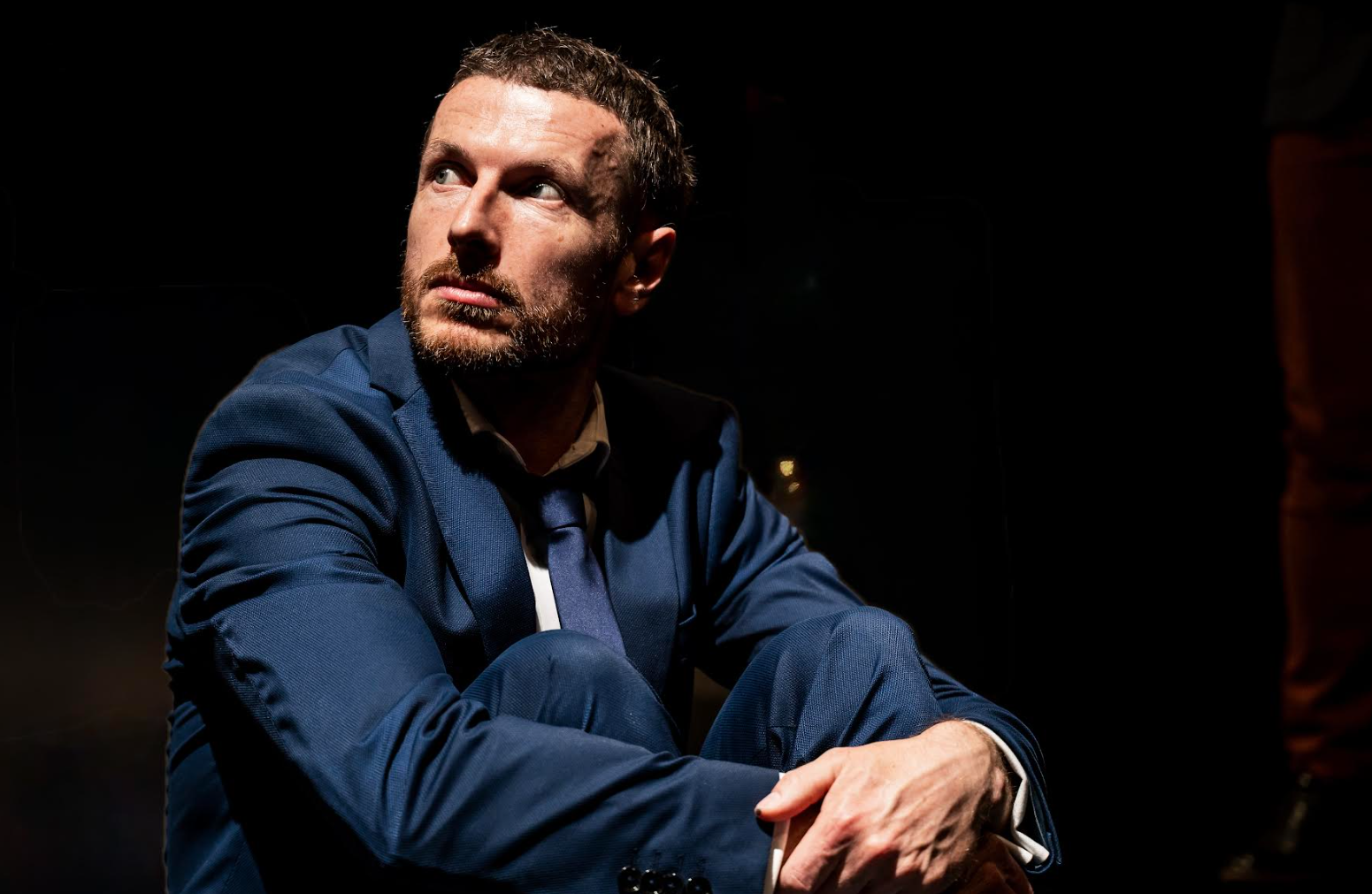
Hello! Tell us about yourself ?
Hi! I’m Mark McAuley, an Irish actor, writer and director based in Dublin. I’ve been working professionally as an actor for about 15 years, across film, television and theatre.
Over the last few years, I’ve also been developing and directing my own work, both on stage and screen, which has been incredibly challenging, but equally rewarding. I’ve always been drawn to stories that explore the psychology of being human, particularly the darker, more complicated sides of our nature, but also stories that are full of heart and humour. I love work that challenges both the performer and the audience, that feels relevant to the world we live in and that I connect with on a deeper level.
I trained at the Stanislavski Studio in Dublin, where there’s a real emphasis on understanding the psychology of human behaviour. I find people and behaviour fascinating. I can sit in cafes observing people for hours.
Diary of a Mad Man is a contemporary Irish adaptation of Gogol’s classic, which I perform and direct. We had an unreal experience bringing it to the Edinburgh Fringe this summer, and I’m really excited to be taking it to London in November.
Tell us a bit about the show Diary of a Mad Man
A man wakes up in a psychiatric hospital and begins telling the audience his story. He’s a lonely, frustrated office worker who feels invisible, overlooked at work and desperate for recognition in a world that seems to have left him behind. But is he recounting the events that brought him to the hospital, or is he making it all up as he goes along, in an attempt to deal with his surroundings and what’s happening to him?
It’s a darkly comic, contemporary Irish reimagining of Gogol’s classic story, written by Derek Masterson. As his obsession with status and his boss’s daughter grows, he retreats further into social media, where his frustrations and grievances find an increasingly receptive audience. But what happens when that validation begins to disappear?
As his paranoia grows, his increasingly distorted view of the world begins to take over, and the lines between reality and delusion become harder and harder to distinguish.
We use multimedia, projection and physical theatre to bring his increasingly fractured world to life. One of the most interesting things about the Edinburgh run was hearing how audiences responded to that experience. People described it as gripping, intense, thought-provoking and surprisingly, very funny. I think that’s what makes the piece work.
The humour draws you into his world, but somewhere along the way you begin to question not just his thinking, but your own reactions to it.
How are rehearsals going?
Really well! I’m taking everything I learned from performing the show 26 times at the Edinburgh Fringe and bringing that into rehearsals for London. The audience feedback, the reviews, and having a full recording of the show have all been incredibly helpful.
As I’m both directing and performing, being able to step back and watch the production objectively is invaluable. It’s given me a chance to see what’s working, what could be stronger, and where we can refine things even further.
That’s one of the great things about theatre. A show is never really finished. There’s always something new to discover!
What can you tell us about the stage set?
The set itself is very simple. Essentially, it’s just a chair! But through the acting, lighting, sound and multimedia, we create this whole world around him.
The integration of projection and lighting was one of the real highlights of the Edinburgh production, and something audiences responded really well to. We use projections onto the walls to bring his increasingly distorted world to life, particularly his online persona and the version of himself he’s desperately trying to present to the outside world.
There’s a real contrast between this imagined world, where he sees himself as someone important and powerful, and the stark reality of his surroundings in a psychiatric hospital.
There’s very little physically on stage, but through the performance and technical elements, we can move between these different realities, sometimes without the audience even realising it’s happening. It’s about creating a world that’s as unstable and unpredictable as the man at the centre of it.
Tell us a little bit about the rest of the cast?
It’s a one-man show, so it’s just me! Although I do play several different characters, sometimes even at the same time, which gets very interesting! There’s also an ominous voice (me on a microphone) that appears throughout the piece, adding another layer to the story and making us question what’s real and what’s happening inside this man’s head.
It’s a very physical performance, and switching between characters, voices and emotions is one of the things I really enjoy about it. It’s also a great challenge as an actor, particularly when you’re having an argument with yourself!
What is the most challenging thing about doing the show?
Probably the sheer physical and mental demands of it. It’s just me on stage for 60 minutes, and it’s a very physical, high-energy performance. There’s nowhere to hide up there. I’m constantly switching between characters, sometimes having conversations or arguments with myself, which requires a huge amount of focus and energy. But that’s also what I love about it. It’s a real challenge as an actor, both physically and emotionally, and I find that incredibly rewarding. It’s exhausting, but I love it.
The best thing about touring the show?
I love bringing the show to different countries and seeing how audiences respond. It’s fascinating how something that gets a huge laugh in one place might get a completely different reaction somewhere else. And it’s not just the comedy, it’s how people connect with the characters and the themes. Everyone brings their own experiences into the theatre, and that can really change how they see the story. But what I find even more interesting are the similarities.
No matter where people are from, there are certain things we all seem to connect with. Loneliness, wanting to belong, wanting to feel valued or recognised. We’re a lot more alike than we sometimes like to believe. I really enjoy that connection with an audience, particularly with a one-man show where it’s just you and them. You can really feed off the energy in the room. That’s what I love about theatre. It’s alive, and every night is different.
What have been some of the best highlights since doing the show?
Some of the best moments were when we had a full theatre in Edinburgh and the energy in the room was just electric.
There’s nothing like that feeling, particularly with a one-man show. It gives you so much back as a performer. Another real highlight was how much people wanted to talk about the show afterwards.
We had audience members staying behind, asking questions, sometimes even shouting them out as soon as the show finished! I loved that. It meant the piece had got people thinking and they wanted to explore some of the ideas further.
We’re planning to do a Q&A in London to give people a chance to talk about the themes, the creative process, and my experience of both performing and directing the piece. I also really enjoyed meeting people who were already fans of Gogol’s original story.
Hearing them say how much they loved our reimagining, how it stayed true to the spirit of the original while feeling so relevant today. To think that a story written almost 200 years ago can still resonate so strongly with modern audiences is quite amazing. That’s good writing for ya.
What is the best reaction you have had from an audience member?
After one performance, a woman came up to me with tears in her eyes and asked if I was ok. She wanted to know if the story was based on something that had actually happened to me, or to someone close to me. She’d clearly been deeply affected by the show, and that really stayed with me.
We spend so much of our lives trying to keep everything together, putting on a brave face, getting on with things. And the world we live in doesn’t always encourage us to stop and really feel. That’s what I love about theatre.
For an hour, you can sit in a room with a group of strangers and experience something together that might connect with a part of you that you don’t often get to explore. Maybe it makes you laugh, maybe it makes you uncomfortable, maybe it brings up something very personal, or maybe all of it.
That woman didn’t come up to tell me how good the acting was or how much she enjoyed the show. She was genuinely concerned about me, about the person she’d just watched on stage. And I found that incredibly moving. It reminded me that the power of art can push through all the noise and connect us with something deeply human.
If people want to follow you on social media where can they find you?
Instagram – @santaponza
Finally in three words why should people come to your show?
Gripping, funny, heartbreaking





Leave a Reply